FrameFusion

Combining similarity and importance for video token reduction on large vision-language models.

70%
Visual Tokens Reduced
1.6-3.6x
End-to-End Speedup
<3%
Avg. Performance Impact

Core Idea

Keep visual tokens that are important and unique.

Importance answers which tokens matter. Similarity answers which of those tokens are redundant. FrameFusion uses both signals instead of treating pruning as the only compression tool.

Unimportant

Prune

Tokens with low cumulative attention are removed under the compute budget.

Important + Similar

Merge

Redundant adjacent-frame tokens are averaged, preserving visual meaning while reducing length.

Important + Unique

Keep

Distinct tokens survive to carry scene details, temporal events, and task-relevant evidence.

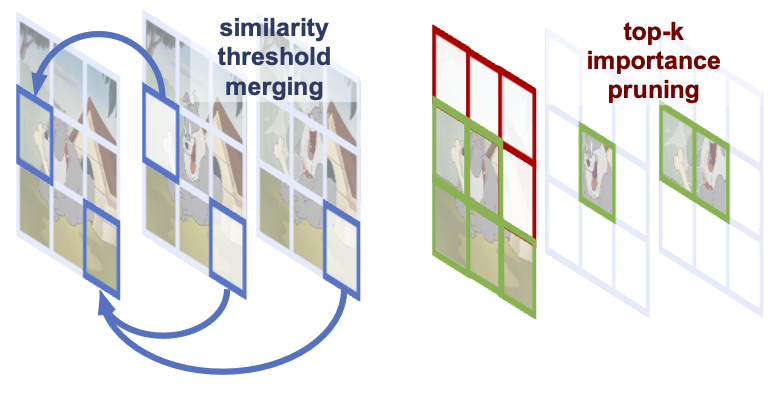
FrameFusion method overview

FrameFusion first merges tokens with similarities above a threshold at shallow layers, then applies top-k importance pruning to meet the target token budget.

01

Merging Stage

Corresponding visual tokens from adjacent frames are compared with cosine similarity. Highly similar tokens are grouped and averaged across successive shallow layers.

02

Pruning Stage

After redundant tokens are fused, FrameFusion uses cumulative attention scores to retain the most important remaining tokens within the compute budget.

03

Cascaded Reduction

Tokens are permanently reduced for later layers, so both attention and feed-forward computation become cheaper as inference proceeds.

Observations

Why merging works for video tokens.

Observation 1:
Adjacent Similarity

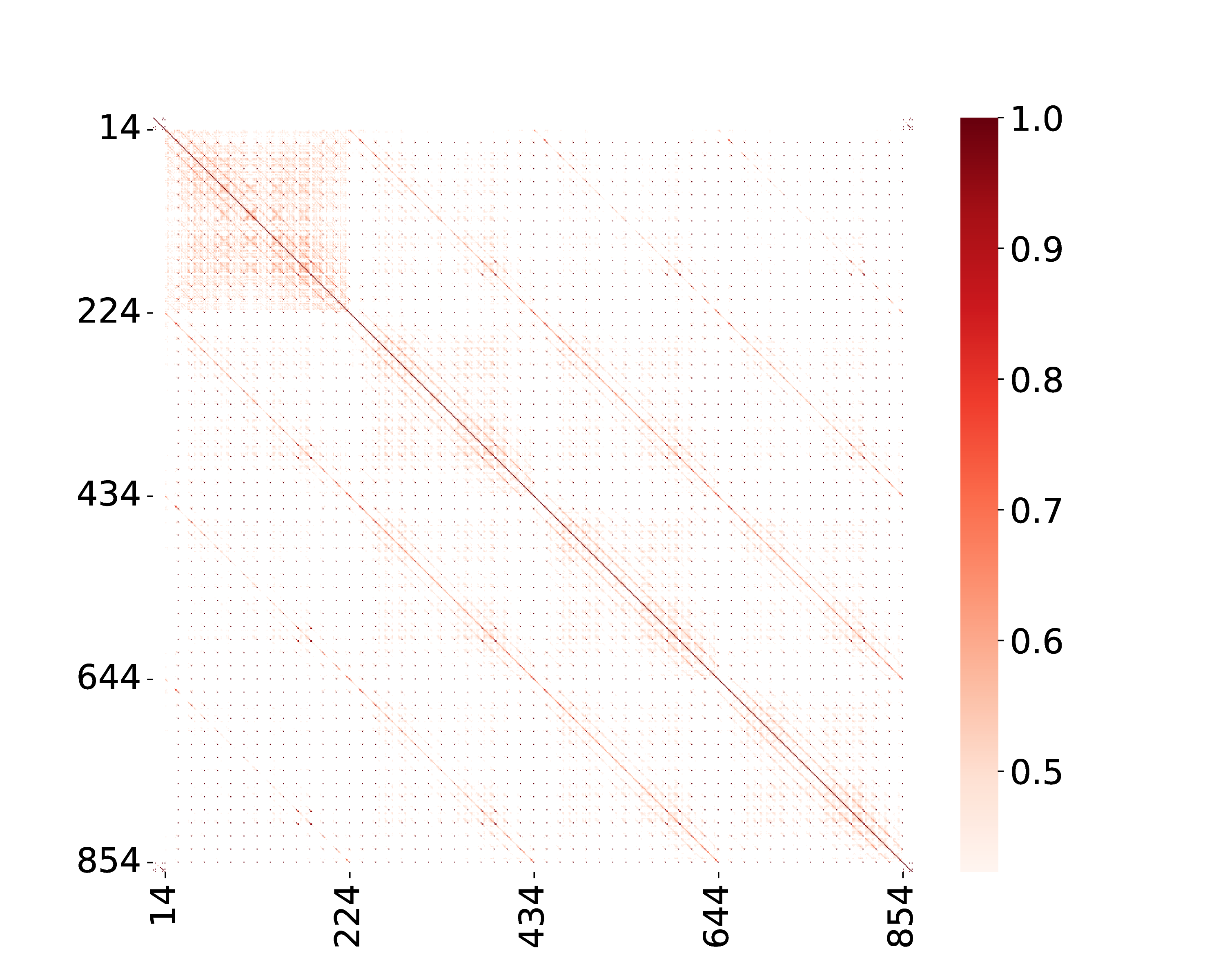
Token similarity between frames

High similarity between adjacent frames

Design Choice: O(N) adjacent-only computation

Observation 2:
Layer-wise Distribution

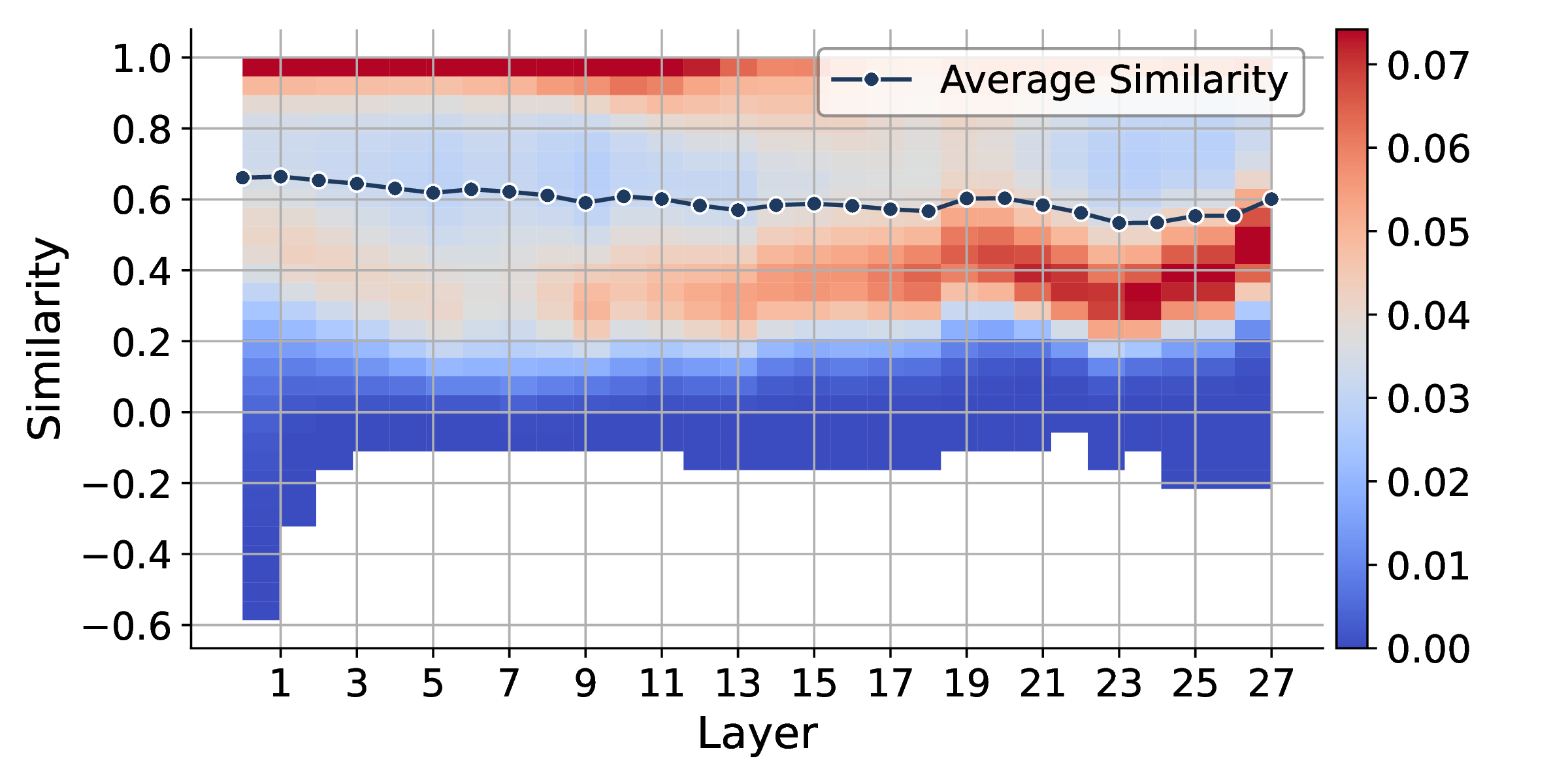
Token similarity distribution across layers

Token similarity distribution condenses as layers deepen

Design Choice: Apply merging at shallow layers

Observation 3:
Ranking Consistency

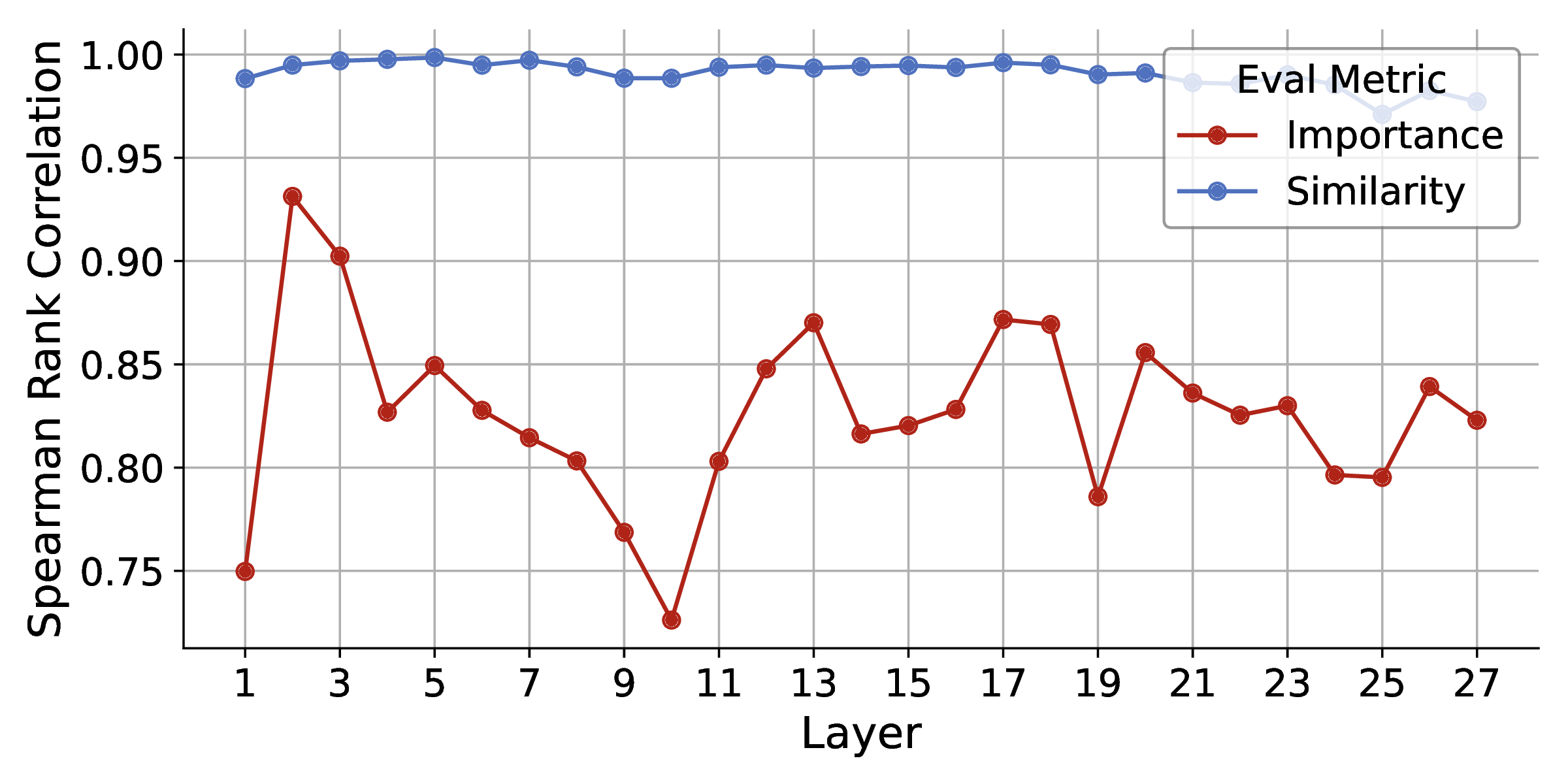
Similarity ranking consistency

High similarity ranking consistency across layers

Design Choice: Cascaded merging strategy

Interactive Examples

Same answers with fewer visual tokens.

The original page interaction is preserved: compare dense inference with FrameFusion as the token counts and response timing change.

Experiments

Benchmark and runtime results.

FrameFusion reduces video tokens aggressively while preserving benchmark accuracy and improving latency.

FrameFusion Performance Summary
70%
Visual Tokens Reduced
1.6-3.6x
End-to-End Speedup
<3%
Avg. Performance Impact
View Demo Video

Demo Video

Watch FrameFusion in action: See how our method efficiently processes video content while maintaining visual quality.

View Detailed Benchmark Results

Performance Comparison

Performance comparison across models, methods, and benchmarks at 30% token budget

Model Size Method VideoNIAH NExT-QA VideoMME EgoSchema MVBench Average
View Runtime Breakdown

Runtime Comparison

FrameFusion runtime performance with different token budgets and frame counts. Select a model and cost level to see the comparison with the original model.

FrameFusion achieves 1.6-3.6x end-to-end speedup, scaling better with larger models and more frames.

Speedup Summary

Select a model and cost level to see speedup statistics.

Interactive Demo

Original frames versus reduced frames.

Compare the original video frames with FrameFusion-processed frames. Use the slider to see how our method maintains visual quality while reducing tokens.

Original frame

Original Frame
(256 tokens)

Loading...
Pruned frame

After FrameFusion
(77 tokens)

Token reduction maintains semantic understanding while significantly reducing computation.

Team

Meet the researchers.

Tianyu Fu1,2* Tengxuan Liu1,2* Qinghao Han3* Guohao Dai4,2 Shengen Yan2 Huazhong Yang1 Xuefei Ning1 Yu Wang1

1Tsinghua University    2Infinigence-AI    3Peking University    4Shanghai Jiao Tong University
*Equal contribution

Citation

Cite our work.

@article{fu2025framefusion,
  title     = {FrameFusion: Combining Similarity and Importance for Video Token Reduction on Large Vision Language Models},
  author    = {Fu, Tianyu and Liu, Tengxuan and Han, Qinghao and Dai, Guohao and Yan, Shengen and Yang, Huazhong and Ning, Xuefei and Wang, Yu},
  journal   = {arXiv preprint arXiv:2501.01986},
  year      = {2025}
}